
Wreck Diving in Albania: A Practical Guide for Recreational Divers
How we conduct external wreck dives near Saranda. Saranda Diving does not organise wreck penetration dives for any guest, regardless of certification or experience.
Julian
PADI Assistant Instructor
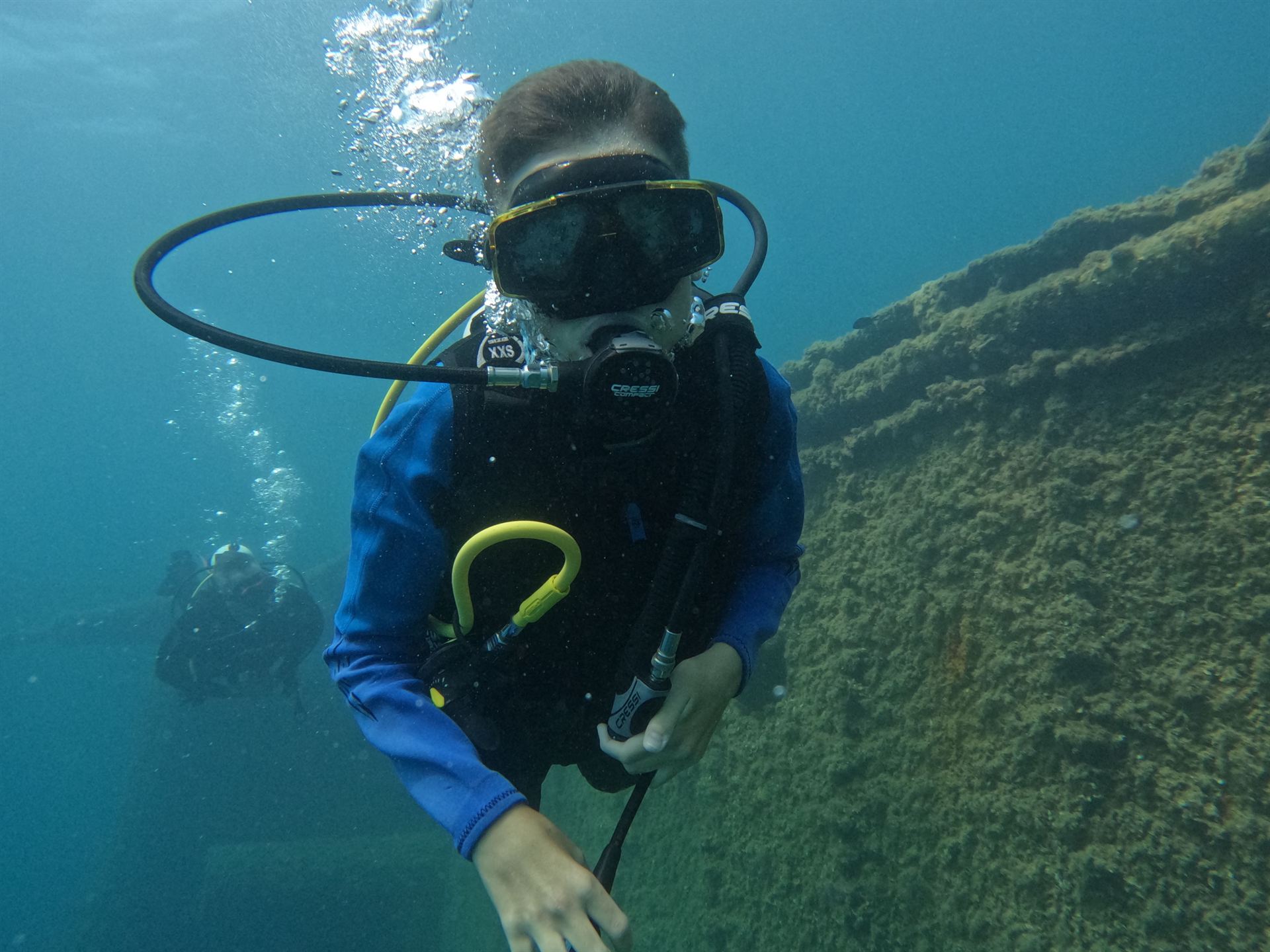
Wrecks are one of the reasons certified divers add Saranda to an Albania itinerary. They combine marine life, structure and history, but the word wreck covers very different dives. Swimming around an exposed hull in open water is not the same as entering a compartment where a direct ascent is impossible.
This guide explains how our team assesses a recreational wreck dive near Saranda. It supports, but does not replace, the site briefing, formal training or the judgement of the Saranda Diving guide responsible for the dive.
Where are the wreck dives near Saranda?
The best-known local wreck is SS Probitas in the Saranda area. The vessel is large enough that a guide can plan different routes according to the group and conditions. South of Saranda, the Ksamil underwater area contains several former vessels at a range of depths. The exact site offered on a given day depends on weather, access, certification and recent diver experience.
Descriptions such as shallow, deep or beginner-friendly are not sufficient on their own. Before assigning a diver, we check the planned maximum depth, the expected current and visibility, and the certification and recent experience required for that plan.
Why our wreck dives remain outside
On an external wreck tour, divers remain where a direct ascent is available. They can observe the hull, machinery, marine growth and fish life without entering an overhead space.
Penetration creates an overhead environment and can involve loss of natural light, restricted passages, navigation hazards and different gas-management requirements. We remove that ambiguity from our programme: guests must not enter a wreck or follow another diver through an opening. Our guides plan and brief external routes only.
Which skills matter most?
Stable buoyancy
A diver should be able to hold depth and position without touching the wreck. Good buoyancy protects the site, reduces the chance of catching equipment and avoids stirring sediment that can reduce visibility for the whole group.
Awareness and positioning
Watch the guide, your buddy, depth, gas and surroundings. Avoid swimming directly above another diver in a narrow area, and keep hoses and gauges secured so they cannot catch on structure.
Gas planning
Agree on the turnaround pressure and ascent reserve before the dive. A wreck is not a reason to stay after reaching the agreed limit. Report your gas honestly when the guide asks.
A controlled ascent
The dive is not finished when the group leaves the wreck. Maintain contact with the group, control ascent speed and complete the planned safety stop when conditions and gas allow.
Do you need a wreck specialty?
A recreational diver may be able to view some wrecks externally within the depth and conditions permitted by their certification. Wreck training can improve knowledge of hazards, mapping, buoyancy and responsible wreck exploration. It does not change our policy: we do not organise penetration dives, including for guests who hold a wreck specialty.
If your certification depth is shallower than the planned wreck, choose a different route or continue your training first. A holiday is not the place to improvise beyond your limits.
What we confirm before booking
- Which wreck is planned and what is its depth range?
- Every route is planned and briefed as external-only.
- What certification and recent experience are required?
- Is a computer, surface marker buoy or other equipment required?
- How large is the guided group?
- Can we offer a shallower alternative if the planned site is unsuitable?
Our answer may sometimes include the phrase it depends. That is honest and normal. We choose a wreck route for the actual group and conditions, not only because a site appears on a timetable.
Protecting the wreck
Do not remove objects, force openings or touch marine growth. Historic wrecks are not souvenir sites. Keeping distance and controlling fins also produces better photographs because the water stays clearer and the subject remains undisturbed.
Wreck diving near Saranda can be memorable without adding unnecessary risk. The best route is the one that fits the team, leaves a safe reserve and allows every diver to return with a clear understanding of what they saw.